

The Memory of Procedure
If you’ve been reading me for a while, you already know The West Wing has a hold on me.
If not, here’s the short version: it’s one of my all-time favorite shows—one I can’t bring myself to rewatch. Not because it lost its shine, but because it came from a country that still believed knowing the rules was enough to do something good with them.
There’s one episode that always stays with me.
Season Two.
The Stackhouse Filibuster.
An old senator stands alone on the Senate floor to protect funding for autism research. The White House staff, watching from their offices, assume it’s just performance. They keep working, write notes home, talk about their kids, and wait for him to collapse. Then someone notices the pattern: Stackhouse isn’t grandstanding. He’s pleading.
When they finally understand, they don’t move to end the spectacle—they move to help. They send in a friendly senator to ask a single question, broken into thirty-seven parts. Under Senate rules, a senator may yield to a question without surrendering the floor. It lets him rest, sip water, and keep speaking.
They didn’t rewrite the rulebook; they read it so precisely they found mercy inside it.
That was the old faith: that empathy could still be legislated by syntax.
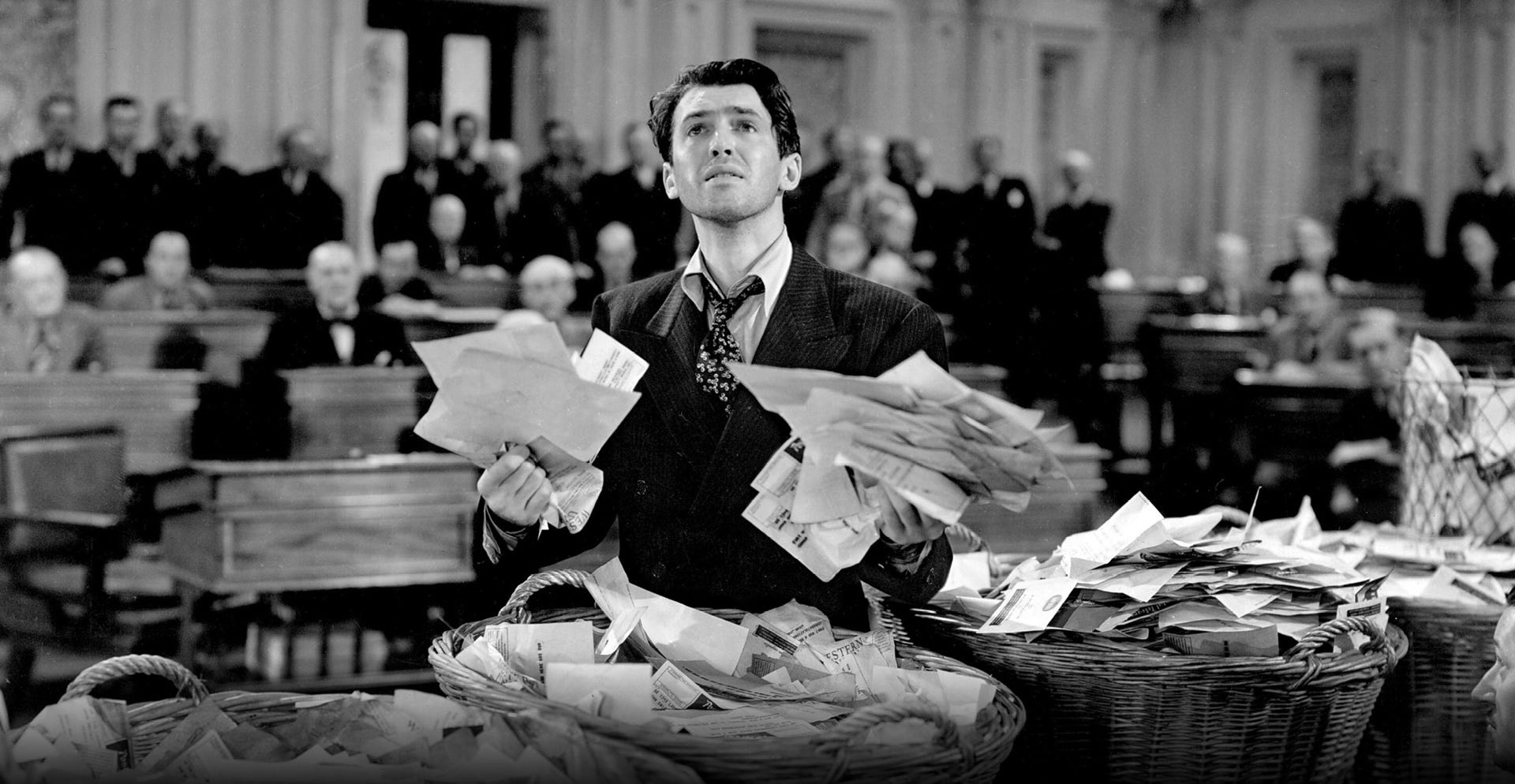
You can see the same instinct woven through our mythology—through the camera of Frank Capra’s Mr. Smith Goes to Washington, where decency survives exhaustion, and in real life when Fred Rogers quietly faced a hostile Senate committee and turned skepticism into funding with nothing more than patience and grace.
Both moments, fiction and fact, reflect the same American impulse: to speak long enough, and calmly enough, that even power begins to listen.
We still have those rules.
What’s changed is what they’re used for.
Law That Outlived Its Spirit
The House is silent.
The Speaker says there’s no reason to reconvene until a deal appears. Technically lawful. Perfectly constitutional. A chamber allowed to stop breathing.
Paralysis as strategy isn’t new; every shutdown has been one.
What’s different is how severe this one has become—and how willingly both sides are testing its limits. We are rapidly approaching past the outer edge of the longest shutdown in U.S. history.
Federal employees are entering their fourth week without pay. Capitol Police still guard a building that won’t meet. Custodians keep cleaning its empty halls. Roughly 33,000 National Guard members continue to serve without compensation. A one-day token payment from Trump’s allies made headlines but didn’t change the principle: the armed forces cannot depend on private charity. That’s not patriotism; that’s privatization of the republic’s bodyguard.
People work on faith until faith stops paying for groceries. Patriotism runs on blood sugar. When the law demands service but withholds sustenance, it’s not order—it’s conscription by starvation.
Each unpaid week pushes essential workers closer to the line where survival outweighs obedience. It begins with guards, cafeteria workers, and janitors in Washington and spreads through every office that actually runs the government. From there, it reaches the sky.
The Speaker understands all of this.
He’s learned that the last lever of power in a democracy isn’t policy—it’s time. By refusing to act, he controls the tempo. Every day of stillness centralizes authority in his hands. Each week that passes trains the country to confuse silence with stability.
The Democrats know it, too. They just don’t know what to do with it. Their messaging has been what it always is: defensive, scattered, wrapped in the language of the ACA. They’re fighting for something that mattered—but not enough. The ACA saved lives, yes. But it’s a decade-old compromise people barely recognize by name, especially in the deep red states most dependent on it.
You can’t keep fighting for what was. You have to fight for what’s next.
Tempo is now the last legal move left. Whoever learns to wield it without breaking the law will shape the next decade of power.
Two exits remain.
If Democrats fold first, they confirm that inaction belongs to him—that he owns the country’s clock.
If they match his endurance but aim it at a moral horizon, they can flip the polarity. Both choices are lawful. Only one restores legitimacy.
The Pressure Point Economy
Government can idle; physics can’t. The next inflection point isn’t ideological—it’s kinetic.
Airports are America’s circulatory system: forty-five thousand flights a day, three million passengers aloft, a national heartbeat of engines and faith. Now imagine that hum faltering.
Air-traffic controllers, unpaid for weeks, start calling out. Safety inspectors are home. TSA lines double because half the staff can’t afford the gas. The Secretary of Transportation assures cameras that ninety percent of controllers are still working—as if that number meant safety instead of imminent failure.
It doesn’t take a strike. It takes exhaustion. One missed hand-off, one empty tower, and you find out what “continuity” actually costs.
Thanksgiving will be the pressure point.
The week when motion itself becomes sacred—families, executives, donors, delegates, all dependent on the same fragile infrastructure. When that motion halts, even for a day, pain finally travels upward. Pressure always seeks its author.
The Speaker is betting that pain breaks the opposition first. The Democrats have to learn that pain can also be direction—the one variable they can control.
If they can hold long enough to make the stillness mean something—to stand for something larger than gridlock—they can tell the country that the pause has purpose.
We’re not waiting for nothing; we’re waiting for you to be seen.
That’s how you flip a weapon into a covenant.
The Moral Line in the Sand
Whoever wins this standstill will prove one of two things: either legality can still expand protection, or it’s been permanently repurposed to contain it.
The Democrats can’t promise a return to normal—normal is what failed. They can’t campaign on restoration. They have to campaign on momentum. Forward progress. The promise of America was never stasis; it was motion.
If the right wants to “make America great again,” the left should remind the country that America was built to move forward.
That’s why the ACA can’t be the rallying cry. The fight can’t be for the compromise of a previous decade. It has to be for something that fulfills the original promise: Medicare for All.
If America can legally suspend paychecks for millions, it can legally guarantee care for everyone.
If the government can survive on emergency protocols, it can build a permanent one for survival itself.
That’s the moral line in the sand. This is no longer a contest of budgets. It’s a contest of endurance—and imagination.
The Speaker proves that delay equals power. The Democrats must prove that endurance equals mercy.
Politically, the timing matters. If elections remain secure, the midterms are the hinge. The gerrymandering clock is already ticking.
If Democrats can frame this shutdown as the moment they held the line for survival, they can run on that momentum—the party that stood still so the country could move again.
With that platform—progress, care, motion—they could plausibly reclaim both chambers, introduce Medicare for All, and then let the veto become the spectacle.
Let Trump veto care. Let the country watch it happen.
That’s not just strategy. That’s moral theater at scale—the same kind of theater that once made Stackhouse stand until his knees buckled.
The Lawful Mercy
When Stackhouse finally yielded, he didn’t win the bill.
He won proof that the law could still listen.
That’s what’s missing now. We’ve mastered procedure so completely that we can stop the nation cold, but we’ve forgotten how to hear through it.
Mercy is still legal. Survival is still constitutional.
All that’s required is someone willing to keep standing long enough to make the law remember why it exists.
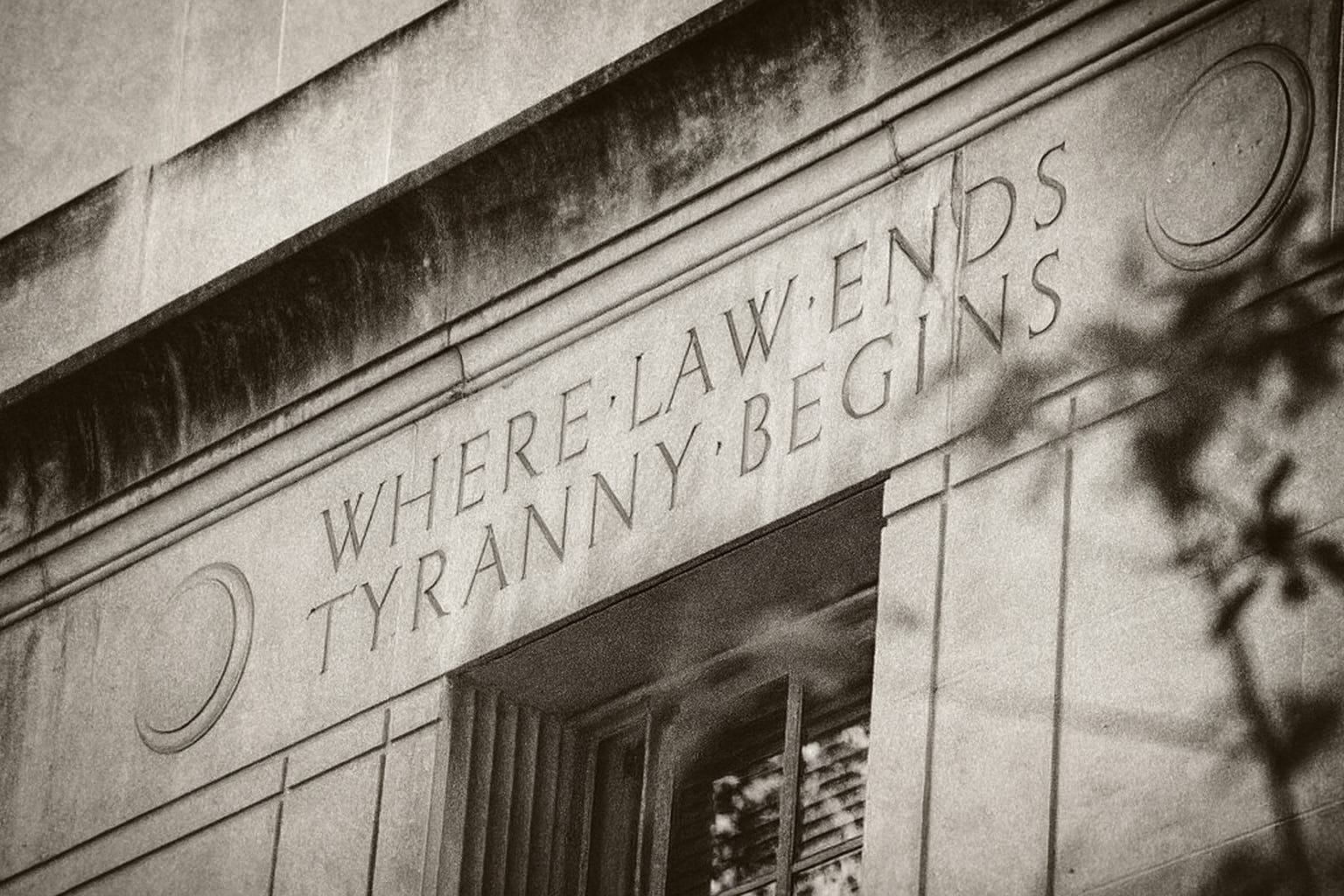
Where law ends, tyranny begins—carved above the doors of the Department of Justice as warning, not prophecy. We haven’t reached the end yet.
There’s still one lawful act left that can redeem the system that forgot its purpose.
Someone just has to decide to use it.