

I was in the office this week for one of my longest-running clients.
We’d been on-site with them for years — through every production cycle, every platform change, every reinvention of how the work got done. Together we built systems that made things faster, clearer, calmer. It was a partnership that worked.
Now they’re closing their doors.
A series of mergers, layoffs, and restructures finally caught up.
It’s not sudden, but it still lands heavy when you’re standing in the middle of it.
There’s a procedure to endings in this business — finishing deliveries, archiving the drives, signing the final paperwork, clearing folder permissions. It’s half ritual, half checklist.
You look around the office — empty edit bays, nameplates half peeled off — and realize it’s all winding down.
Being one of the last people left is a strange kind of responsibility.
You remember where everything lives, what every note meant.
You’ve already done your grieving; you made peace with it months ago.
But when it finally hits paper — the signatures, the empty desks — it still feels like a loss.
The Chalkboard
I was in the kitchen grabbing a water when I noticed the chalkboard — still hanging there, mostly blank.
A few faint outlines from old designs were left behind, and it made me think of one of the younger team members who’d started there not that long ago.
He was an intern who’d worked his way up to PA.
Smart, steady, reliable. The kind of person who noticed details most people miss.

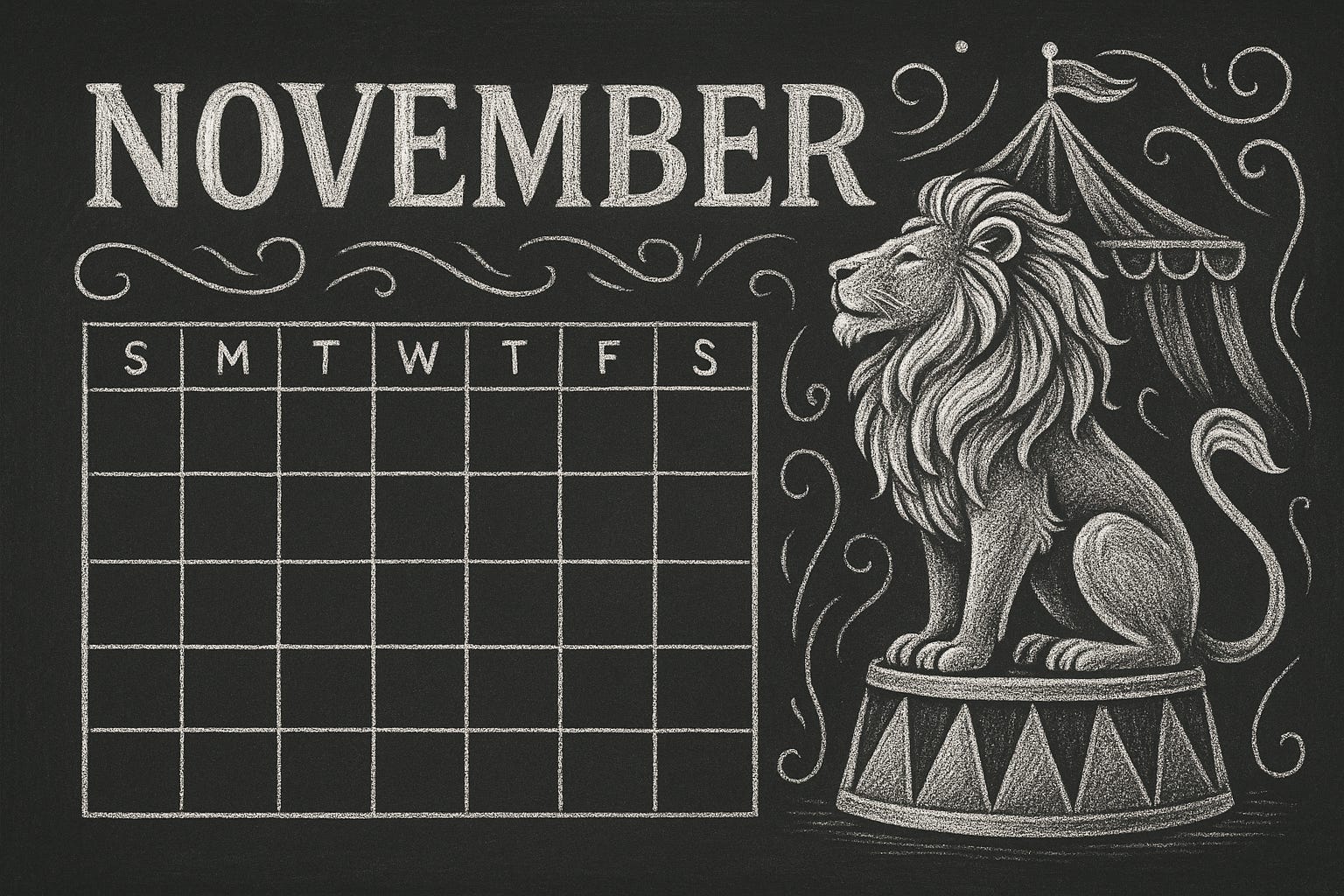
He was the one who used to take that chalkboard every month and turn it into something great — birthdays, holidays, little seasonal jokes.
Fun, simple designs that gave the office some personality.
He didn’t do it because anyone asked him to.
He just had the natural impulse to make things a little better — to bring some order and life into the room.
That’s what always stood out to me. You can’t teach that.
It’s the kind of instinct that, if you nurture it, can become the thing you build a career around.
He happened to be there that day, picking up a few last boxes.
We caught up for a bit.
He told me he was moving back home, taking shifts at the diner for a while.
He smiled when he said it — that polite, practiced kind of smile people use when they’re trying to sound okay.
He’ll be fine. I don’t doubt that.
But I could see the hesitation — that mix of fear and logic you only get when you’re young and standing on the edge of something uncertain.
I told him again what I’d said before: that he had a gift, and that people would pay for that kind of work.
Chalkboards, weddings, signage, murals — simple ideas, small ways to start.
He said he’d think about it.
And I get it. I really do.
Stability is a powerful thing.
It’s hard to walk away from the safety of what you know, even when what you know is ending.
Sometimes the best advice you can give someone is the simplest one: just start.
It’s easy to say and hard to live by.
Planning feels responsible. Reflection feels smart.
But if it never turns into movement, it’s just a loop.

The Rhythm That Works
I’ve seen it play out in productions, in business, in myself.
You can’t plan your way to motion.
You have to move your way to better planning.
That’s how I run my business.
It’s how I like to lead my teams.
Plan. Move. Adjust.
Over and over.
I learned that rhythm years ago with a counterpart at the client — a VP who ran the production schedule with me.
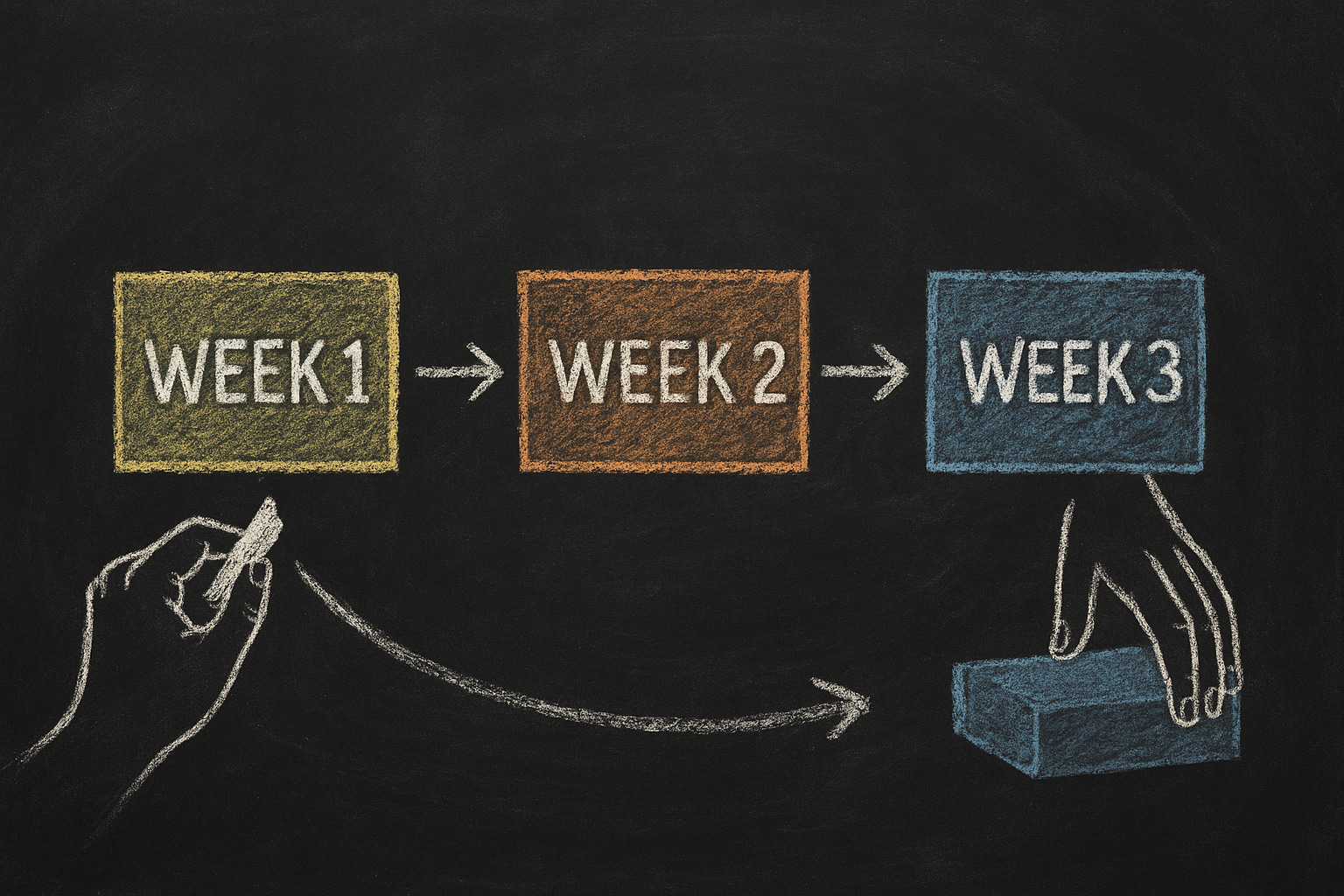
Every time we sat down to map it out, we’d only plan two weeks ahead.
Anything beyond that was guesswork.
We’d lock what we could see, then start.
The moment we moved, the plan changed — and that was fine.
That was the point.
You learn while you’re doing.
The plan gets sharper because you’re already in motion.
That’s the same rhythm I keep now with my business partner.
It’s how we run everything — short windows, constant recalibration.

We’ll look two weeks out, maybe three if we have to, tighten what’s in front of us, and keep moving.
That’s what keeps the company alive.
We don’t try to lock the next six months.
We make the best next move, measure it, and make another.
Momentum and Trust
Reflection matters. Thinking matters.
But the work only breathes if you’re doing both at the same time.
That’s what I hope that young guy eventually figures out — that momentum doesn’t mean rushing ahead blindly.
It means keeping the loop alive: plan, act, learn, adjust.
Don’t freeze.
Don’t wait for certainty.
He’s got time. He’ll find it.
But I hope he starts soon.
Because in the end, that’s what keeps any of us working —
not the perfect plan, not the guarantee,
just the willingness to move.
That’s what’s carried me through every closing, every reset, every start.
Plan. Move. Adjust.
That’s the work.
Great essay! I’d also like to add that any schedule, regardless of time window, works better when the people making the schedule understand the process, the time sucks, and what the worker is being asked to accomplish with the tools provided. And I agree with you on the person you described even without knowing them. Certain skills can be taught and some can’t. Sounds like their timing on entering the television industry was just a little off. I hope they land on their feet. Judging by your description of them, I think they will. And great chalkboard work!!!