

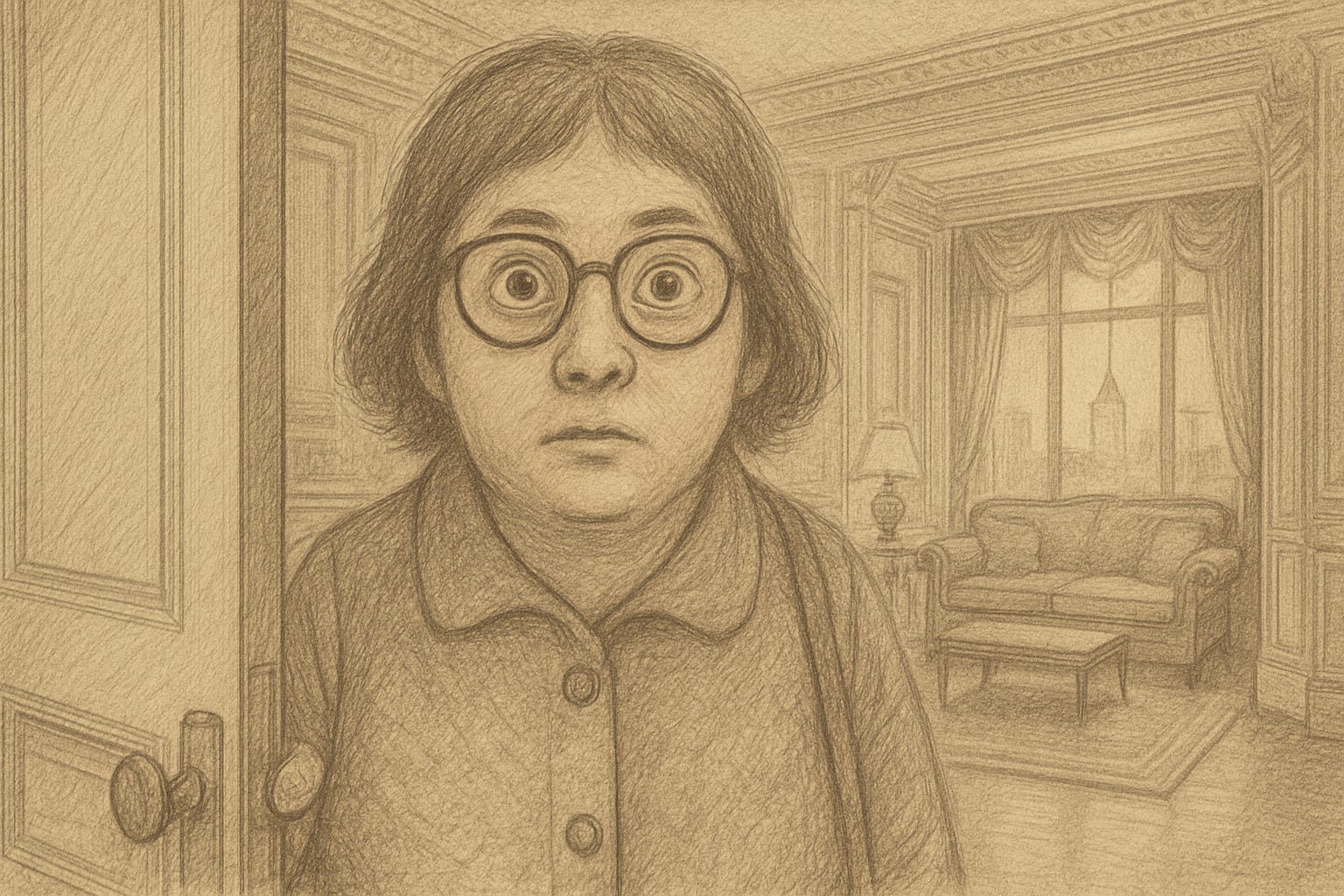
You can tell the second the door opens.
It was the middle of COVID — masks, sanitizer, appointment only.
After years in television, I’d moved into real estate and suddenly found myself in a profession that required being there in person during a pandemic. Super fun.
I’d just landed a new listing through an old-fashioned postcard campaign — real hustle in a city that had gone silent. The owner called to say he respected anyone still out there drumming up business during lockdowns. That call alone changed my quarter.
Before the pitch, I did my homework.
It was a brownstone. Fifth Avenue. Holy hell.
I researched everything I could — the family who built it in the late 1800s, the maid’s quarters, the children’s floor, how it was eventually divided into five full-floor apartments. Five owners, five floors, five egos.
Then I met the seller and saw the apartment. I understood immediately why the previous listing hadn’t moved: no staging, no neutral reset — just the original owners’ taste, untouched. The craftsmanship was impeccable, but it was so specific it smothered the imagination. You couldn’t picture your life there because theirs was baked into every surface.
We reset it. Stripped the walls, painted everything white, opened the rooms. The contrast between the dark floors and the clean white made it timeless. When we finished, it looked like a feature spread in Architectural Digest — a livable art piece. Arresting. Immaculate. People called long after it sold, just to ask who had staged it.

I brought along a young agent — early twenties, smart, ambitious, naturally charismatic, sharp with people. He was going to go far, and I wanted him to see what real discernment looks like up close.
An email came through: unrepresented buyer.
At that level — north of two million — that never happens. You don’t walk into a brownstone like this without an agent unless you don’t know how the process works.
My flag was already up. But duty was duty. You show the property.
So I scheduled the appointment, headed uptown, and prepped the apartment.
She arrived mid-afternoon, maskless until I reminded her.
As she stepped inside, I did the quiet scan every seasoned New York agent does — posture, energy, ring, wardrobe, confidence. Her clothes weren’t frumpy, but her presence lacked the ease of someone comfortable at this price point. You can tell when someone belongs in these spaces. It isn’t about the label on the coat; it’s about how certainty drips into the smallest decisions. She had none of it.
The math was clear. There was no version of this woman buying this floor.
Then she said the line that ends every showing before it starts:
“I’ve been searching for years and still haven’t found the right one.”
That’s when you know — you’re not in a sale, you’re in a story.
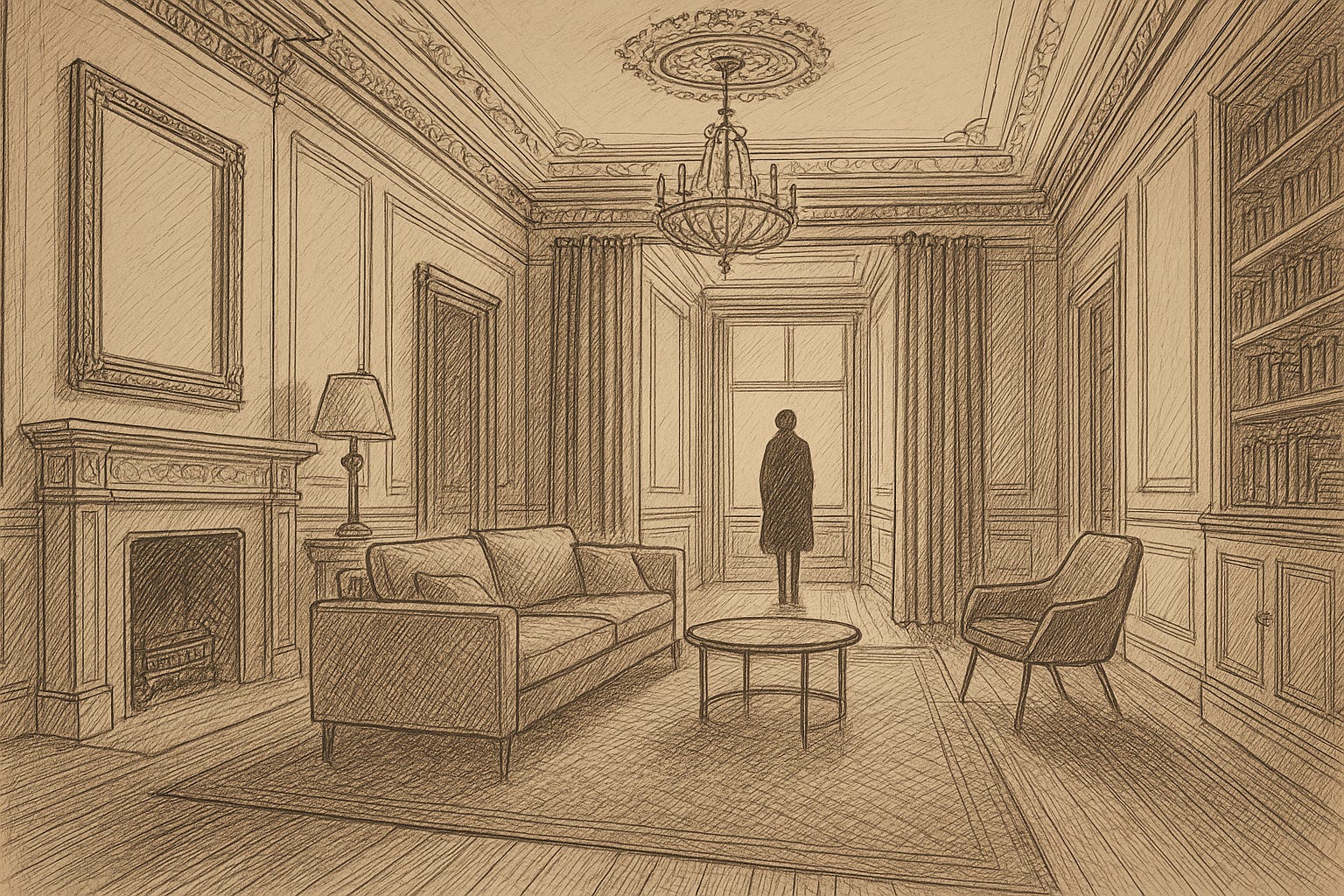
I watched her move through the apartment — the slow walk down the center, through the living room, past the kitchen, toward the rear windows.
The space runs deep, so the walk tells you everything: serious buyers ask questions. She didn’t. She reached the back wall, looked up at the tall windows, stood there a beat too long, and turned back.
When she reached me again, the performance slid into place — shoulders lifted, the practiced sigh, the half-smile.
“It’s not for me,” she said. Pause. “But if you hear of anything else…”
There it was — the bait.
The soft hook that’s caught more young agents than any training course ever could.
I let the silence stand. Not curt — just still.
You could feel her waiting for me to fill it, to promise follow-ups, to chase the maybe.
I didn’t.
Because I could see her history — years of wandering through other people’s listings, of pulling young agents into endless loops of polite hope. It was her social ritual.
But not today. Not with this one. Not with my young agent beside me.
We walked her out politely, thanked her, closed the door.
“She seemed interested,” he said.
“No,” I told him.
“She was interested in being interested.”
Three days later, that apartment sold. Full ask.
That’s what I wanted him to see:
You can do everything right — price perfectly, stage immaculately, market with precision — and still meet someone who was never going to move.
The work is seeing it early, holding your silence, and protecting everyone’s time.
Because sometimes the sale isn’t the point — it’s the mirror.
And the only way to stay sane in any market — real estate, media, or your own work — is knowing when someone came to buy, and when they came to perform wanting.