

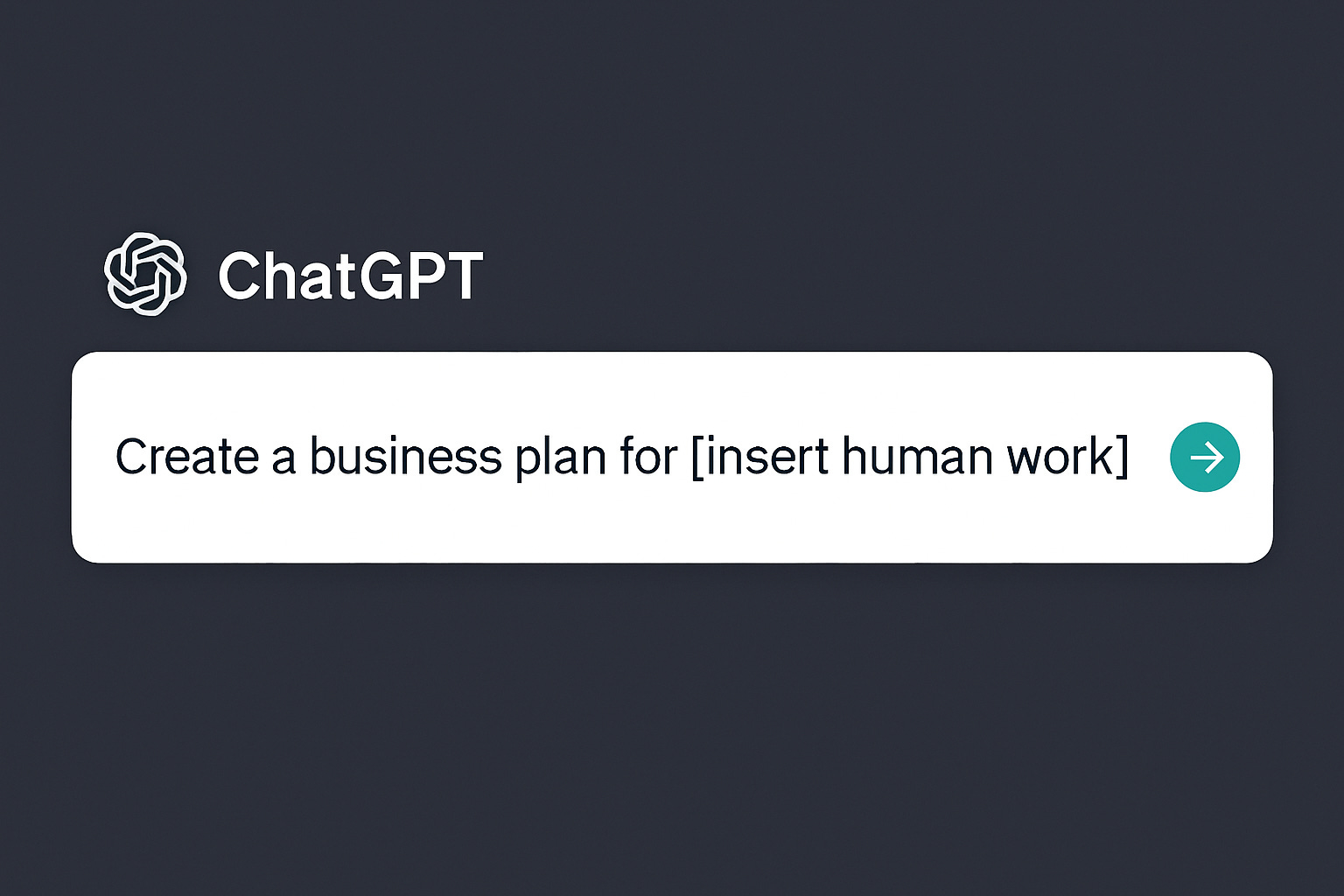
It’s become its own genre:
“100 ChatGPT prompts to change your life.”
Swipe, scroll, bookmark.
Every one of them looks the same:
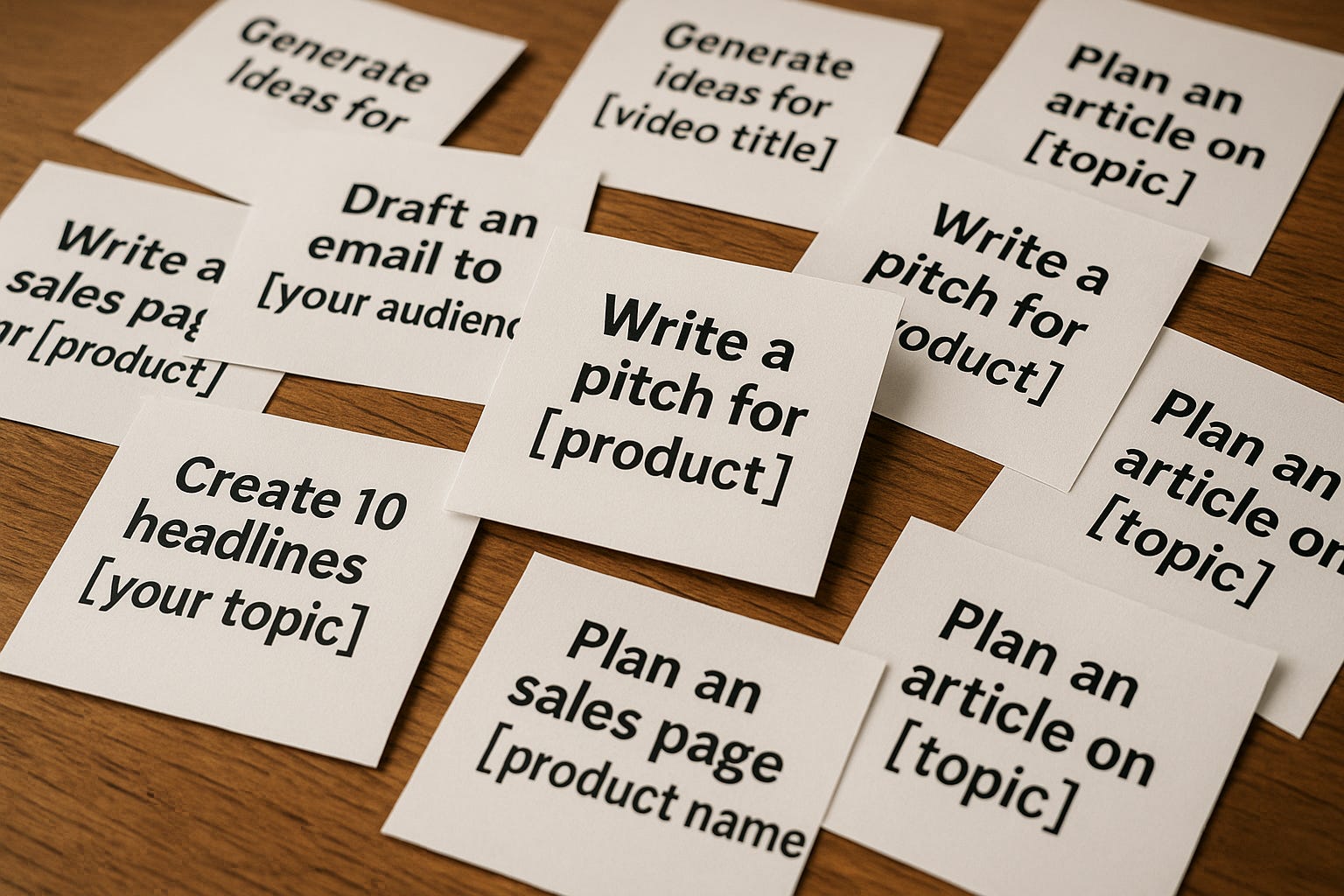
“Write a business plan for [insert your idea].”
“Generate 10 product names for [insert your product].”
“Draft a pitch email for [insert your audience].”
The trick is hidden in plain sight.
The power isn’t in the prompt.
It’s in the brackets.
The Prompt Hustle
I’ve lost count of how many LinkedIn posts or Twitter threads I’ve read that promise “the ultimate prompt pack.” They rack up likes, comments, and reshares. People really want to believe the magic is in the words you feed the machine.
But look closer. The structure is always the same. The actual prompt is filler. The system is selling you the illusion of leverage.
The real load-bearing part — the thing that makes the AI useful or useless — is what you put in the brackets. Your business idea. Your product. Your story. That’s the part they can’t sell you.
It’s the hardest part. It’s also the only part that matters.

What the Brackets Really Mean
“Write a sales plan for [my product].”
→ But what is the product? Who buys it? Why would they care?“Write a funding pitch for [my startup].”
→ But what problem do you solve? What market are you entering? What proof do you have?“Write a marketing strategy for [my brand].”
→ But what’s your positioning? Your wedge? Your voice?
The machine fills space. You still have to fill the brackets with something real.
That’s not a trick. That’s the work.
Why the Brackets Hurt
Most people stumble here.
Because what goes in the brackets isn’t surface-level.
It’s identity.
Naming the real thing you want to build.
Accepting the risk that it might fail.
Distilling the messy human intent into a single sentence that can survive automation.
AI can’t carry that for you. It will carry the repetition, the scaffolding, the formatting. But it will not invent the thing that matters in your brackets.
That’s your job.
The False Shortcut
The prompt packs are popular because they hide that truth. They let you feel like you’re making progress without facing the hard work of defining what belongs inside the brackets.
It’s the same instinct that fills hard drives with half-finished pitch decks, or notebooks with abandoned outlines. Collecting prompts feels like motion. But motion isn’t traction.
At some point, you have to stop scrolling and name your damn product.
90% of “prompt packs” are filler.
The brackets hold the only thing that matters.
What Doing the Work Looks Like
Doing the work isn’t glamorous. It means:
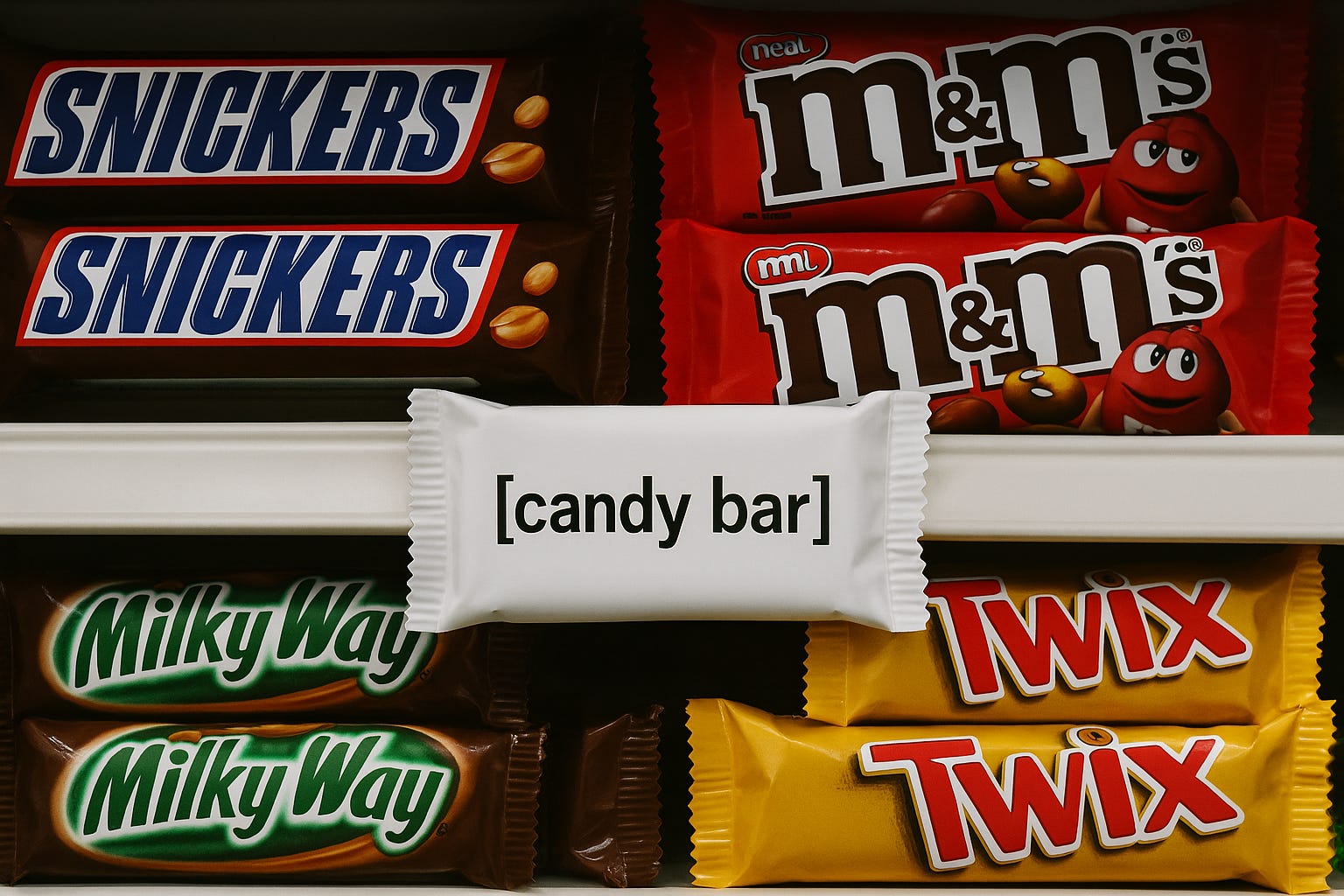
Interrogating the brackets. Not “a book,” but your book. Not “a candy bar,” but your candy bar, your market, your brand story.
Breaking the silence. Writing the messy draft, the first outline, the ugly version you’d never show anyone.
Iterating in public. Testing your idea where it can fail, and learning if anyone cares enough to pay.

AI can draft 10,000 versions. None of them matter until you’ve put something true into the brackets.
A Personal Note
I use AI every day. It carries the load. It structures my thoughts, cleans up my phrasing, and helps me see the edges of my own argument. I’m not anti-prompt.
But I don’t confuse the filler words with the work.
The work is sitting with the bracket until it’s not empty anymore.
That’s why most of the “ultimate prompt packs” feel hollow. They skip past the hard part. They pretend the brackets will magically fill themselves.
They won’t.
The Human Part
Prompts don’t build businesses.
People do.
AI doesn’t save you from naming what you want to make.
It just waits for you to fill the brackets.
And if you can do that — if you can sit with the silence long enough to name your book, your show, your product, your company — then the machine becomes powerful.
Until then, it’s just filler.