

It was a throwaway line, second-to-last paragraph, in a trade article most readers probably skimmed.
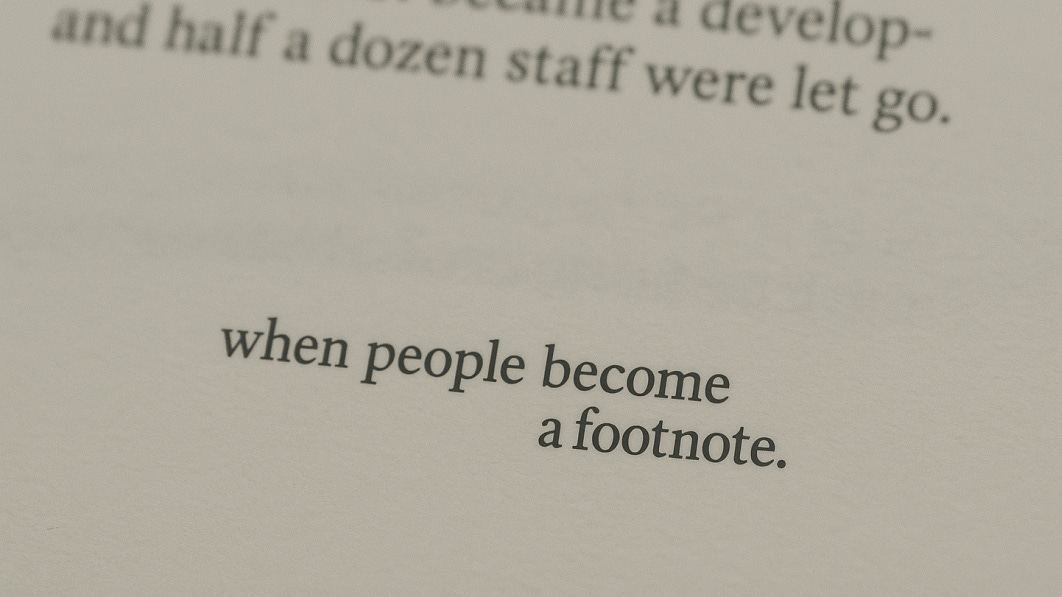
“All3 Media has been making sweeping changes to its labels… Lion TV U.S. became a development studio, and half a dozen staff were let go.”
That’s how it ended. Not with a headline. Not even its own piece. Just a clause. Half a dozen.
I read it three times, hoping I’d mis-seen it. Half a dozen? No. It wasn’t six. It was years. It was hundreds of people over time. Whole rooms of editors, coordinators, producers, assistants, researchers, clearance staff. Families built on steady paychecks. Neighborhoods carried by television work. It was shows delivered against impossible deadlines. It was a building filled with people who made culture, quietly, professionally, for decades.
And now it was reduced to a sentence. A footnote.
When a Company Becomes a Paragraph
The part that hurt wasn’t accuracy. It was scale. The silence of those words implied it didn’t matter. That six was small. That six was manageable. That six didn’t ripple.
But it did. When a production company folds into “development pod” status, it isn’t six people out of work. It’s the end of a pipeline that once carried hundreds. Every freelancer who lost a season. Every assistant editor who didn’t get hired. Every producer who stopped climbing because there was no ladder left.
That sentence erased them too.
Market Forces, Not Blame
I’m not blaming individuals. Market forces were real. Budgets contracted. Streamers pulled back. Cable cut deeper. Formats got offshored. And behind it all were the mergers — the mergers on mergers.
RedBird Capital bought in. Skydance merged with Paramount. This week, they’re already circling Warner Brothers. There’s going to be nothing left to merge, because it will all be consolidated into a few corporate blocks that no one can tell apart.
It’s how the choices were made that stings. Collapse wasn’t inevitable. It was accelerated.

What’s Left to Pivot Into?
So what’s the plan now? Advertising? Everyone’s going to advertising. Vertical video? Everyone’s already there. And all of that marketing work? It’s being replaced by AI, faster than anyone wants to admit.
The story isn’t just unscripted television. It’s the collapse of educated, specialized work across the economy. You see it in tech. You see it in education. You see it wherever high earners once thought they were safe. Those jobs are next.
The collapse isn’t waiting. It’s here.
New York Carries the Loss
Lion Television’s New York office wasn’t just an address. It was groceries bought in Queens, rent paid in Brooklyn, tuition checks mailed in Manhattan. Those paychecks sustained lives across the city.
When the trades dismiss a company as six jobs lost, they erase the city-scale impact. What looks small on paper is enormous on the ground. Each “dozen staff” carried vendors, landlords, coffee shops, day care centers, after-school programs. Collapse doesn’t stop at the office door.
This is what it means to live in a city built on creative work. The lines in the articles never capture the lines in the bodegas.
What Collapse Really Looks Like
Collapse doesn’t arrive with an explosion. It arrives in increments. A canceled series here. A smaller budget there. A division quietly absorbed. And then one day, your life’s work is compressed into the end of someone else’s article.
That’s collapse. Not the sound of breaking glass, but the silence of being written small.
The Moral Line
I lived through that silence. And I don’t want it to be the last word.
Because collapse written as six jobs can still destroy hundreds of lives.
Because what we lose when we compress companies into clauses is the reality that whole communities were built on those paychecks.
And because if we don’t start naming what this looks like, New York will keep losing not just jobs but whole industries, one quiet footnote at a time.